
Collective Management Organisations
Matteo Fedeli (SIAE): ‘Some big shots in California have decided how much our repertoire is worth’

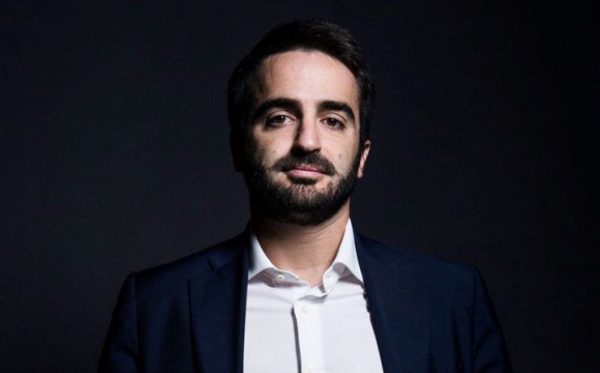
Last week, Meta took the decision to take down Italian repertoire represented by rights society SIAE from platforms such as Instagram and Facebook. To understand what is happening, Creative Industries News spoke to Rome-based Matteo Fedeli, CEO of SIAE and Milan-based Francesca Trainini, from music publishing company peermusic Italy, about the situation, how it got to that point and what could be done to fix it.

So what’s the situation today?
Matteo Fedeli: Well, we have an issue (laughs). At the beginning, they [Meta] removed everything from their library and now they are removing almost all of SIAE-managed content. They are still removing things that should not be removed. It seems that the real capacity for Meta to switch off content is not as 100% proof as they were thinking it was. They have removed content from their library that gives the possibility to sync for new creations on Instagram. WhatsApp is in a different situation. I think they realised it is more complicated than what they were thinking. It seems that the only entity capable of removing content with 99,9% certainty is YouTube.
Which happened with GEMA’s repertoire a few years back.
Matteo Fedeli: Yes, but the big difference is that GEMA asked YouTube to remove their repertoire. In our case, they wanted to remove everything and after four days they just removed a big part of sync material on Instagram. But their goal is to remove everything from all platforms. In this situation, Meta is removing our repertoire to force us to sign what they were proposing and that was a take or leave offer. Since January, we have given them a guarantee that we would not sue them for using our content without license while we were negotiating. We were negotiating with a covenant by which we agreed not to sue them to give them some sort of comfort to make a negotiation in good faith. They never said our offer was not reasonable, and we never said our offer was take or leave — we were in a negotiation and we tried to reach a point where we could close a deal. But in the end there was still a big gap between their offer and ours. They told us, this is our offer, take or leave. We asked if this was their final number and their answer was ‘this is our budget’. So someone based in California must have said this is the budget for Italy. This is not how this works.
You said there was an issue about access to data.
Matteo Fedeli: They shared nothing regarding data, in particular in terms of revenues. They just said, this is the final number, but without sharing any information to back it up. Under these conditions, it was very difficult for us to say yes. They just did to us what they did in other countries to force us by removing some content.
But isn’t Article 17 of the Copyright Directive making it mandatory for them to negotiate?
Matteo Fedeli: In theory yes, but they provided zero information. We had access to SEC filings and were just able to use public information but in those filings, there are no specific details to Italy and by platforms. It is difficult to find a deal with someone who is not sharing anything. We closed a deal with YouTube in a solution that was mutually satisfying, we closed a deal with Spotify… With the Directive, the motto is the more you share the less likely you will pay. It is a matter of access to information. As [Sony Music Publishing President Global Digital] Antony Bebawi says, ‘If you make me guess, I will guess high’! In the end, if I do not know about your business, it is an issue to make a deal.
Francesca, have you ever witnessed such a situation and how does it affect you?

Francesca Trainini: This is a brand new situation for us. It is the first time something like that happens and affects the business of publishers. We are in complete support with SIAE. There has been quite a number of successful negotiations with tough counterparts undertaken by SIAE that were concluded with mutual satisfaction. We do not see why the situation with Meta is at such loggerheads, and why other platforms could reach an agreement with SIAE and Meta can’t. What we can see is that the company’s strategy is changing and they are changing course. Therefore they have to be careful on certain things and to them copyright is one of the things disposable or more or less disposable. It is hard to understand. They also demonstrate a lack of understanding of their platforms. They are tampering with their platforms and they have no mandate for that. For labels, it has an impact and it also impacts many other parts of the industry like the live sector. An artist I am close to, Eros Ramazzotti, was performing in Milan for four days and his content on Instagram was going up and down. This is not normal. It can be damaging for Eros and for the Italian cultural industry. The Directive gives the PROs some tools to make the place a fairer place. I do not understand the attitude of Meta. Writers need to make a living.
So what’s the next step?
Matteo Fedeli: From our perspective, obviously we want to continue negotiating, but the real problem is the take or leave proposal. Some big shots in California have decided how much our repertoire is worth. They are saying that they can influence the culture of a country. They removed Italian music from Instagram, something made to threaten SIAE and the Italian industry. The issue should now be addressed at government level. We don’t want this to go on for months. Basically, it’s not good for SIAE, Meta, artists and the music industry. This strong position is not good. We are very much open to continue the negotiations, but it has to be a negotiation, not an imposition. This is not acceptable. We are talking about the value of Italian authors’ rights and that can’t be decided in California and make it match a line in their costs. This is different and they need to accept this. We know that we are not asking stupid money. If I say I want a billion euros, this is not realistic, so we have to be realistic. FIMI said Meta accounted for 20 million euros in revenues for the labels, and this gives us a benchmark. We know that we are asking something that is feasible.


Collective Management Organisations
SACEM Day brings focus on AI as rights society celebrates its 175th anniversary
Collective Management Organisations
PPL collected £315.3m in neighbouring rights in 2025, up 4.75% year-on-year
Collective Management Organisations
SOCAN distributed CA$512m in 2025 from revenue of CA$587.1m, up 5% y-o-y



Believe promotes TuneCore’s Akhila Shankar to lead Artist Services business across India and South Asia

Massive Attack sign global recording agreement with UMG’s Play It Again Sam

SACEM Day brings focus on AI as rights society celebrates its 175th anniversary

The MLC plans webinars to show members how to use tools to manage song data

Six takeaways from The MLC’s first annual report for 2021: distributions, membership, matching rates, processed works, historical unmatched works and expenditures

Olivier Chastan (Iconoclast): ‘Name, image and likeness will be as important as music rights in the future’


-
 Collective Management Organisations3 years ago
The MLC plans webinars to show members how to use tools to manage song data
-
 Collective Management Organisations4 years ago
Six takeaways from The MLC’s first annual report for 2021: distributions, membership, matching rates, processed works, historical unmatched works and expenditures
-
 Interview4 years ago
Olivier Chastan (Iconoclast): ‘Name, image and likeness will be as important as music rights in the future’
-

 Collective Management Organisations4 years ago
Cécile Rap-Veber (SACEM): ‘We are a solutions provider to create value, a tech company, and we are less and less seen as some sort of cultural institution’